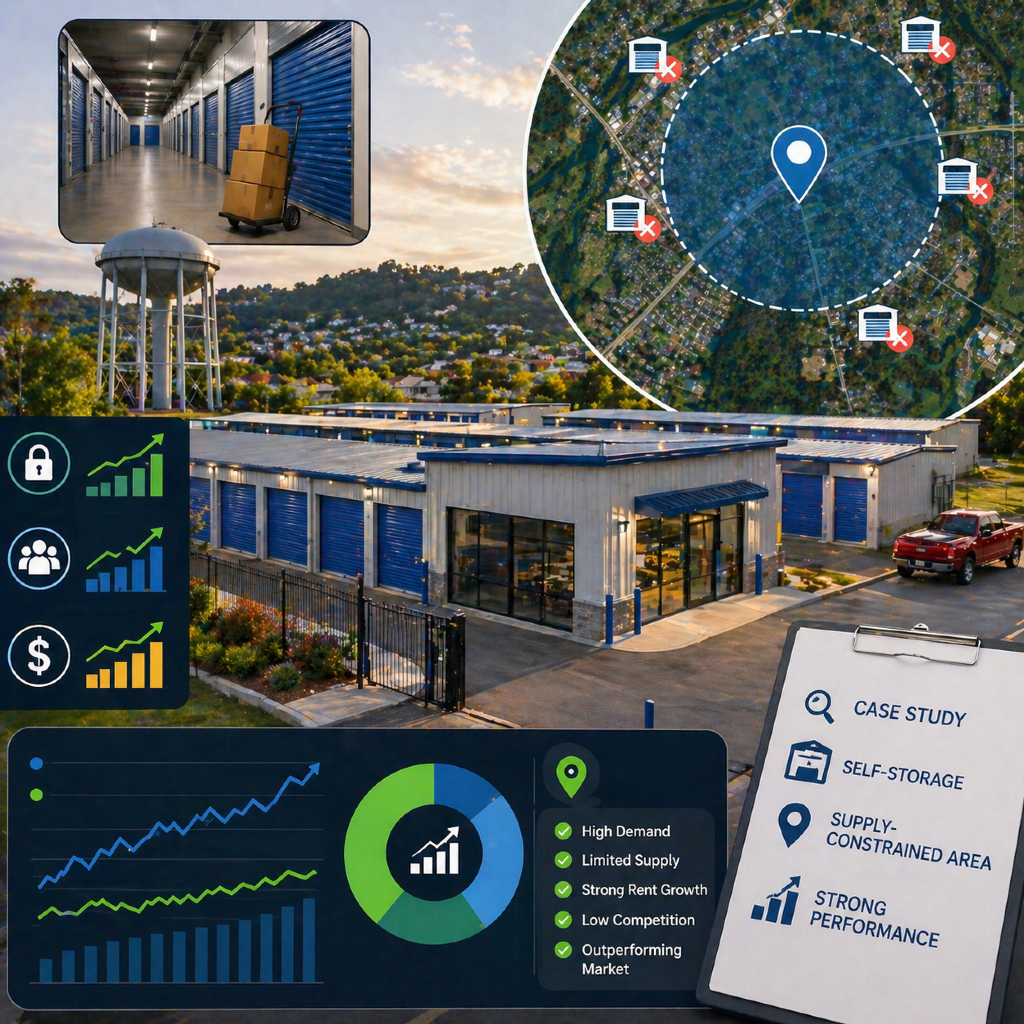

Key Takeaways
- Supply constraints can boost occupancy and rental rates but require careful operational strategy.
- Adaptive reuse and data-driven planning are essential for thriving in limited-supply self-storage markets.
In today’s real estate landscape, self-storage has emerged as a resilient asset class—especially in areas where supply is tightly constrained. This article examines what defines these environments, why supply gaps matter, and how operators and agents can navigate challenges and opportunities in limited-supply self-storage markets.
What Defines Supply-Constrained Self-Storage?
Key Characteristics of Supply Constraints
Supply-constrained self-storage markets are characterized by a persistent imbalance between available storage space and local demand. Hallmarks of such areas include consistently high occupancy rates, long tenant waiting lists, and reduced frequency of new facility openings. Limited new development options, either due to regulations or land scarcity, further intensify these conditions.
Operators in these locations often see limited inventory turnover, making newly available units highly sought after. For real estate professionals, understanding the underlying drivers—such as market absorption rates and population density—is crucial to benchmarking performance and setting expectations.
Typical Causes in Local Markets
The leading causes of supply constraints tend to stem from urban development restrictions. Zoning codes might limit self-storage as a permitted use, or land suitable for storage may be repurposed for higher-density commercial or residential projects. In established neighborhoods, available parcels may already be built out, or competitive uses, such as retail or multifamily housing, may outbid storage for the same land.
In some suburban and exurban areas, infrastructure limits—such as lack of road access or utilities—can also create pockets of unmet self-storage demand. Local market data often show that in-migration, rapid population growth, or small-business expansion can rapidly outpace facility additions.
Why Do Supply Gaps Matter in Self-Storage?
Impact on Occupancy Rates
In restricted-supply markets, occupancy rates typically run above 90%, well above the national average reported in broader industry surveys. This high occupancy provides property owners with more predictable cash flows and can be attractive to both buyers and lenders. It may also result in lower marketing expenditures per leased unit, as organic demand fills space quickly.
Agents and operators should be aware that persistently low vacancy can also signal unmet demand, encouraging higher rents but possibly driving prospective tenants to alternative solutions if constrained for too long.
Effect on Rental Pricing Trends
Limited availability allows managers to implement more dynamic pricing strategies. Rents can be raised more frequently, especially during peak demand seasons or after tenant turnover. However, it is important to balance maximizing revenue with maintaining customer loyalty and local reputational standing. Aggressive pricing in markets with highly sensitive consumer segments might backfire, especially if substitutes (like portable storage or creative leasing alternatives) begin to appear.
Tracking historical rental rates versus regional economic trends helps agents advise investors on appropriate forecasting, mitigating risks linked to overaggressive rent escalations.
How Do Supply Constraints Influence Market Performance?
Revenue Patterns in Limited Supply Locations
Markets with tight supply generally demonstrate more stable, and often elevated, revenue per available square foot (RevPAF). Facility performance in these areas is bolstered by consistent occupancy and premium pricing, allowing for steadier cash flows compared to more volatile, overbuilt markets. Additionally, ancillary income sources, such as tenant insurance and late fees, can be more reliably captured.
For agents and investors, this stability is a significant draw—but it also means underwriting assumptions should be conservative, as expectations of dramatic revenue growth may be unrealistic without new development or repositioning.
Competitive Positioning for Facilities
A facility located in a supply-constrained zone enjoys a strong competitive moat. With fewer direct competitors and limited risk of new entrants, long-standing operators can focus on optimizing operations and building customer relationships. However, complacency is a risk; proactive property maintenance, technology upgrades, and responsiveness to evolving tenant expectations become even more critical in preserving market share.
Agents working with facility owners can benefit from highlighting operational excellence and proven track records rather than just location advantages when assisting with transactions or portfolio expansions.
What Are the Operational Challenges?
Balancing Expansion and Market Saturation
While high demand often encourages owners to explore expansion, regulatory and logistical hurdles can stall or halt these plans. Even in strong markets, hastily planned expansions can lead to temporary oversupply or underutilized space, especially if market growth stalls or new entries arise faster than anticipated.
Market analysis—including feasibility studies and competitor pipeline tracking—is essential before pursuing any expansion. For agents advising on land acquisition or permitting, accurately communicating these timelines and risks helps manage investor and owner expectations.
Operational Efficiency in Tighter Markets
With fewer available units, maximizing operational efficiency becomes essential. This includes streamlining lease administration, implementing dynamic pricing software, and ensuring quick unit turnover. Staff training on customer service, digital marketing, and reputation management should be prioritized, as every tenant interaction becomes critical in word-of-mouth-driven environments.
Facility modernizations—such as contactless rentals, security upgrades, and climate control—can differentiate an operator in a tight market, reinforcing value beyond just location.
Examples: Results from Recent Supply-Limited Markets
Case Data and Market Metrics
Recent data from metropolitan areas with supply caps and restrictive zoning (such as select boroughs in New York City or central San Francisco) support that self-storage sites consistently maintained occupancy above 92% from 2020 through 2025. At the same time, average effective rental rates have grown 4–7% annually—outpacing inflation and broader real estate benchmarks.
Surveyed facilities in these markets also report lower delinquency rates and longer tenant durations, pointing to higher customer stickiness where alternatives are few. Investment sale transaction reports indicate these assets trade at a premium to comparable properties in more saturated regions.
Lessons from Agent and Operator Perspectives
Agents active in these markets emphasize that deal flow is driven less by distressed sales and more by strategic repositioning or portfolio consolidation. Operators note that relationships with local officials and a robust understanding of municipal codes have become differentiators. Documented success stories often highlight adaptability—a willingness to consider creative solutions, such as vertical expansion or integrated retail partnerships, when pure ground-up development is not feasible.
Can Self-Storage Thrive Without New Development?
Adaptive Reuse and Redevelopment Approaches
In supply-limited areas, converting existing structures—such as warehouses, retail boxes, or even defunct office properties—into storage has become an effective alternative to new builds. Adaptive reuse projects often benefit from expedited permitting, lower initial costs, and more rapid lease-up phases. Operators capable of evaluating building suitability, accessibility, and compliance with storage-specific fire and security codes tend to outperform in this space.
Long-Term Implications for Investors and Agents
Long-term, persistent supply constraints can result in attractive, stable yields for self-storage investors—provided they remain vigilant to shifts in local economic conditions and demographic trends. For agents, success will depend on building expertise in zoning, redevelopment project management, and understanding the nuanced risk-reward calculus of limited-supply investing. As municipalities and market conditions evolve, educational awareness remains crucial for aligning owner, tenant, and investor interests.